
Mega festivals have become too big to be environmentally sustainable, new research warns
Academics call for carbon budgets as a condition of licensing, and for capacity reductions at the largest festivals where other measures fall short
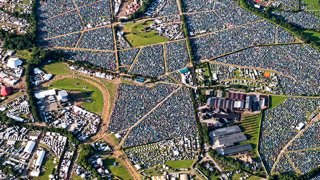
The world's largest music festivals cannot cut their environmental impact while they keep getting bigger, and licensing authorities should be prepared to cap audience numbers, according to a new peer-reviewed paper by Adrian Bossey (Independent Researcher), Dr Mike Duignan (Centre for Events & Festivals) and Dr Teresa Moore (A Greener Future).
Over the last decade we have seen major festivals, including Download and Glastonbury, increase in scale and capacity to become mega events both in the UK and beyond.
The authors call on the large-scale festival sector and those who license festivals to confront an uncomfortable truth: when it comes to the climate, bigger can no longer mean better.
The paper, forthcoming in the journal Event Management, argues that festival gigantism – the sustained shift towards larger and more complex events – creates a corresponding upward pressure on absolute environmental impacts. Quantitative evidence repeatedly demonstrates that travel is the single biggest impact and that it scales strongly with audience size and internationalisation. As a result, operational practices, no matter how polished, are unable to compensate for the increased travel emissions.
The authors argue that festival gigantism is not a peripheral concern; it is the central sustainability problem facing the mega music festival sector. The evidence is unambiguous: absolute environmental burdens continue to rise because scale outpaces efficiency. Polishing operations while expanding capacity is not a sustainability strategy; it is a contradiction. Bigger bins, greener generators, and carbon offsets cannot compensate for hundreds of thousands of people travelling to a greenfield site with inadequate public transport. The sector cannot offset or efficiency-measure its way out of a structural growth problem.
The climate emergency demands more than good intentions and incremental improvements. It demands that festival organisers, licensing authorities, and policymakers treat capacity as a sustainability variable, not a commercial given.
Carbon budgets should be a condition of licensing. Travel demand management should be mandatory, not aspirational. And where all realistic mitigations fall short, as the evidence shows they currently do, degrowth through reducing absolute audience capacity must be on the table for mega festivals.
"Whilst this will be contentious, we believe that the sector must choose: value over volume, or business as usual in the face of a climate emergency."
Adrian Bossey
"Make no mistake: this is not a fringe concern but a mainstream one, in Britain and worldwide. Festivals have grown too big, too fast, with too few guardrails to stop profit trumping planet. It is a vivid example of what Andy Burnham has diagnosed in British society and beyond: the creeping commercialisation and privatisation of everyday life, and the damage it leaves behind."
Dr Mike Duignan
"Our paper is designed to provoke discussion. We argue that festival gigantism and its increased environmental impacts can only be addressed through explicit governance, including capacity reductions."
Dr Teresa Moore