
Carbon Counts Shift in 2025: How DEFRA’s Updates Impact the Events Sector

Our team at A Greener Future has reviewed the newly published 2025 greenhouse gas (GHG) emission factors from DEFRA and analysed what they mean for festivals and live events. Updated each year, these factors change how emissions are calculated - and this year’s updates could mean noticeably lower reported totals for many events, especially those with significant international travel.
Key Updates You Need to Know
Plane travel emissions shrink, especially for long-haul flights (down by 41.5 %).
Electricity emissions drop by 15 % due to a cleaner UK grid and greener imports.
Water-related emissions shift: supply is up 25 %, but treatment is down 8 %.
Diesel use now penalised more, while petrol and hybrid factors adjust to real-world use.
Recycling emissions fall 27 %, encouraging better waste diversion.
Overall, the new conversion factors are likely to reduce reported audience travel emissions. While our sample event shows a 15 % reduction, the actual impact will vary depending on the proportion of international attendees or domestic flights. For some festivals, the reduction could be significantly higher.
Below, we take a closer look at each of these changes and what they mean for festivals and live events - from audience travel and energy use to waste, water, and more.
DEFRA GHG Conversion Factors Update 2025: What It Means for Festivals
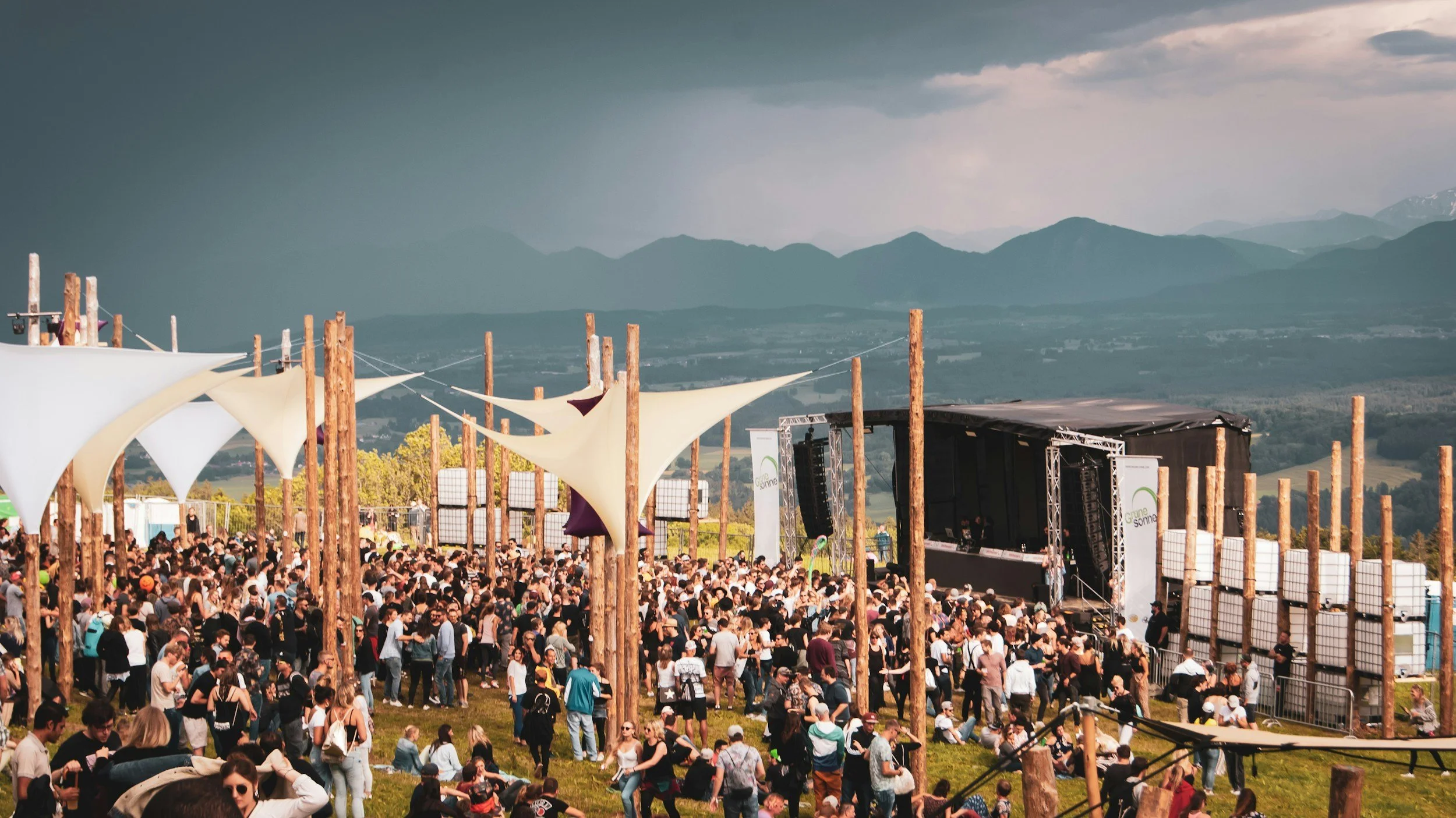
The UK Department for Energy Security and Net Zero (DESNZ) has released the 2025 update to the official greenhouse gas (GHG) conversion factors. Commonly referred to as the DEFRA GHG factors, these tools are essential for calculating emissions in the events industry, where temporary infrastructure, energy use, water, waste, and especially travel (by audiences, artists and crew) represent major contributors to total carbon footprints.
Based on our aggregated data from festivals and events across Europe in 2024, we’ve analysed how the 2025 factors will influence reported footprints. Here’s what you need to know.
What Are DEFRA Conversion Factors?
Conversion factors allow organisations to estimate greenhouse gas emissions associated with their activities, by multiplying measurable activity data (e.g. litres of fuel, kilowatt hours of electricity, kilograms of waste) by the relevant emission factor.
Carbon Footprint (t CO2) = Activity Data x Emission Factor
Updated annually, these factors reflect changes in fuel mix, technology, transport efficiency, and waste processing.
Key Changes in 2025 and Their Impact on Festivals

1. Flights: Major Reductions in Reported Emissions
Short-haul flights (<1,500 km): Emission factor decreased by ~30%.
Long-haul flights (intercontinental or >3,700 km): Emission factor decreased by ~40%.
Audience travel is the dominant source of emissions for nearly all festivals and events in our dataset. The reduced aviation factors will significantly lower reported emissions for events with international reach.
These changes relate to updates on how the data is calculated, and now better reflects the actual mix of planes in use, and account for the higher flight occupancy levels in the post-covid recovery.
Even with these lower numbers, air travel still has a high impact, and reducing flights where possible remains key.
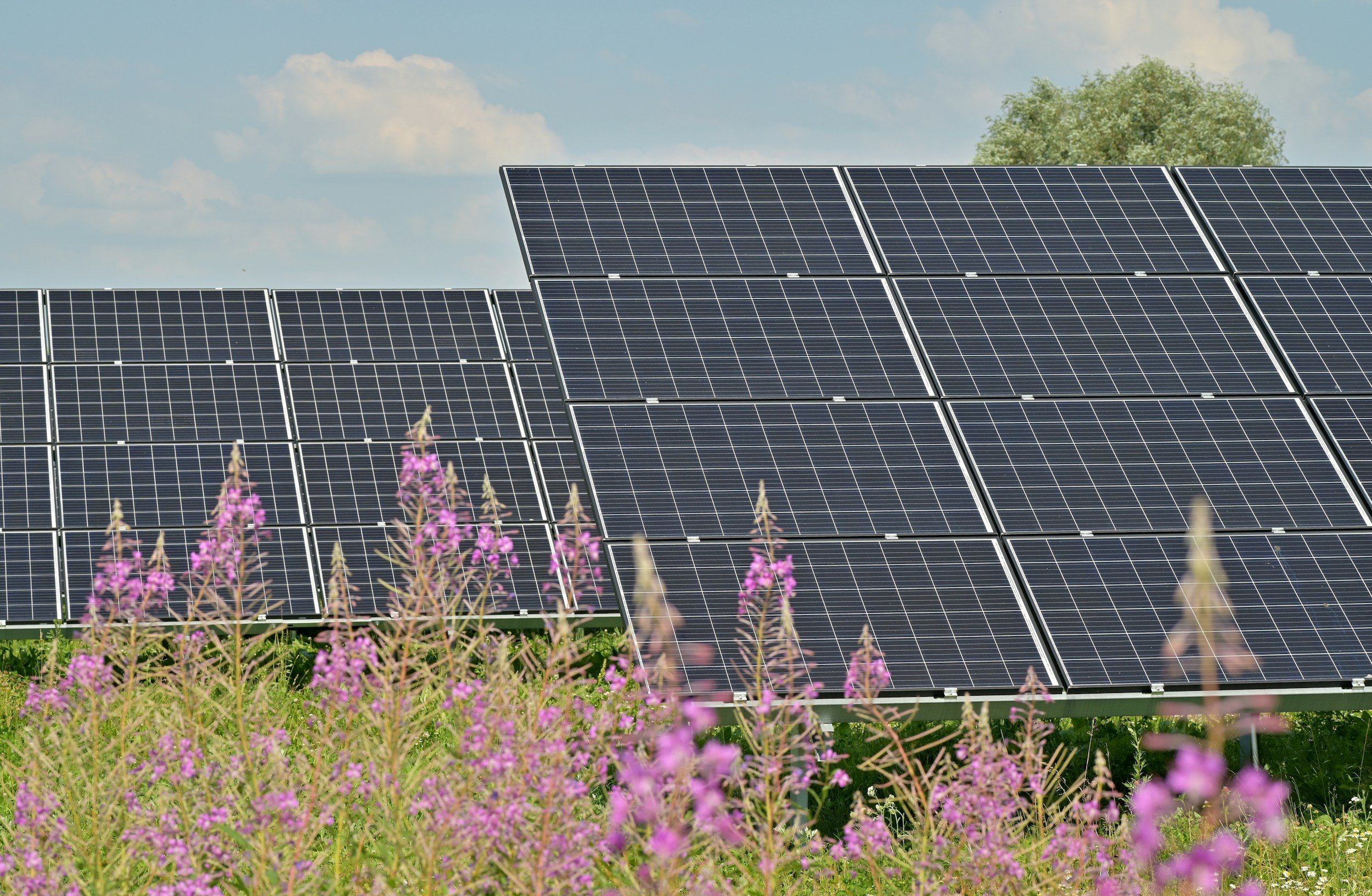
2. Electricity Emissions: Ongoing Grid Decarbonisation.
The emission factor for electricity consumed directly from the UK grid has decreased by 15%.
The reduction is driven by lower gas use in UK power generation and increased import of low-carbon electricity. UK Events powered via the national grid will see a reduction in Scope 2 emissions.
Additionally, emissions from diesel combustion have risen slightly. Events that still rely on diesel generators will see marginally higher emissions. Transitioning from diesel generators to grid connections, on-site renewables or battery systems charged from grid supply, becomes an even more advantageous strategy.
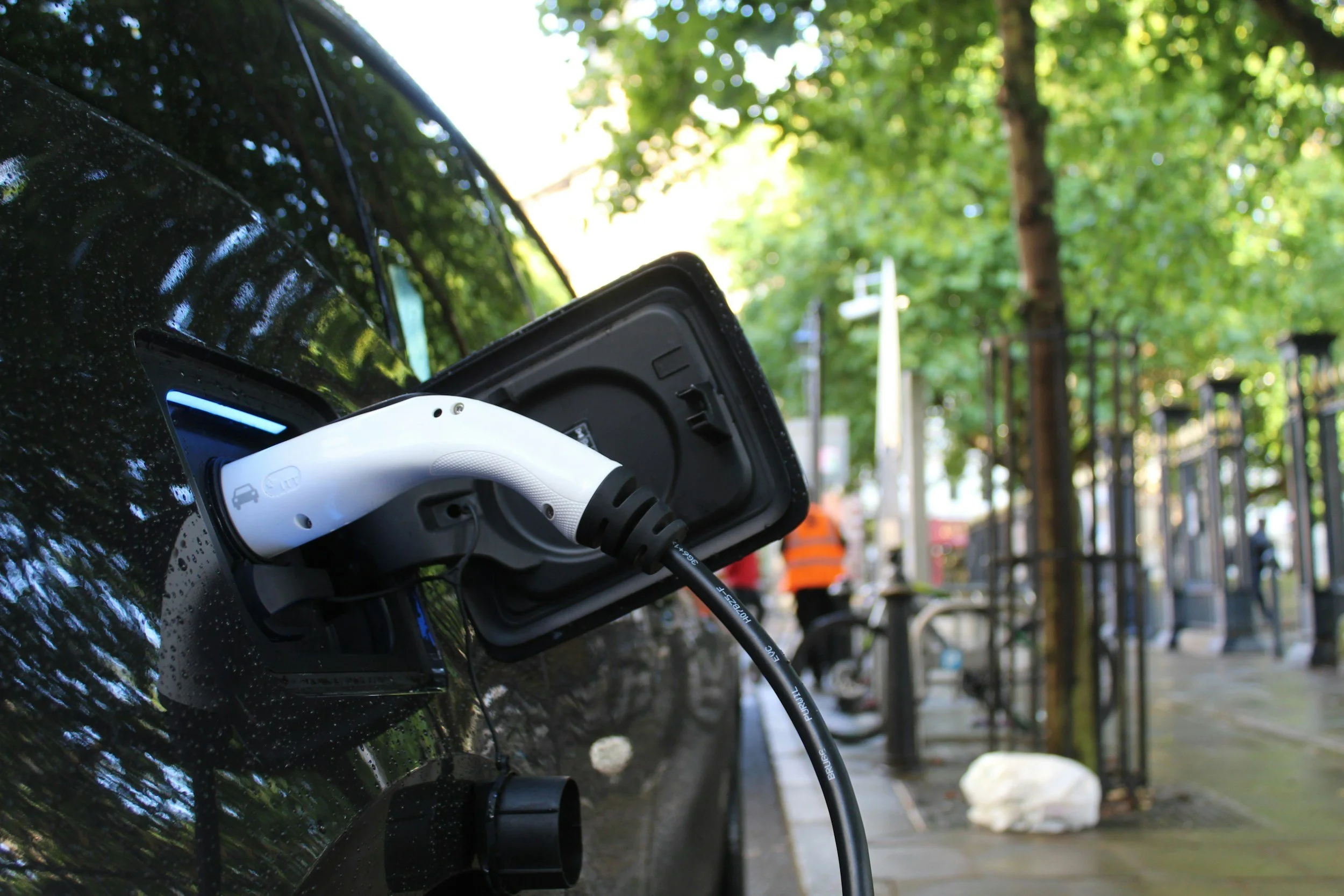
3. Battery Electric Vehicles (BEVs): Significant Reductions
The emission factors for BEVs have decreased significantly in 2025. For passenger cars and vans, emissions have dropped by 13% to 22% thanks to a cleaner UK grid and better vehicle efficiency.
Events using BEVs for transport will report lower emissions. Using BEVs for transport can now yield greater carbon savings.

4. Waste: Recycling and Energy from Waste Emissions Down 27 %
Emissions related to transporting waste to recycling and energy recovery facilities have decreased, due to updated modelling of waste logistics. These factors cover transport only, not processing.
Events with effective recycling systems will see lower emissions in this category.

5. Water: Mixed News
Emissions associated with water supply have increased by 25%, while those from wastewater treatment have slightly decreased.
Although water represents a small share of overall emissions, it is resource-intensive and should not be overlooked.
Estimated impact of the 2025 DEFRA updates on festival emissions
To illustrate how the updated 2025 DEFRA factors affect reported emissions, we’ve applied the updated factors to a real event from our 2024 dataset. This event had detailed data across all major impact areas, allowing a clear comparison by category.
The result? A 15.4 % reduction in reported emissions overall, without any change in activity levels. This drop is solely due to the updated emission factors.
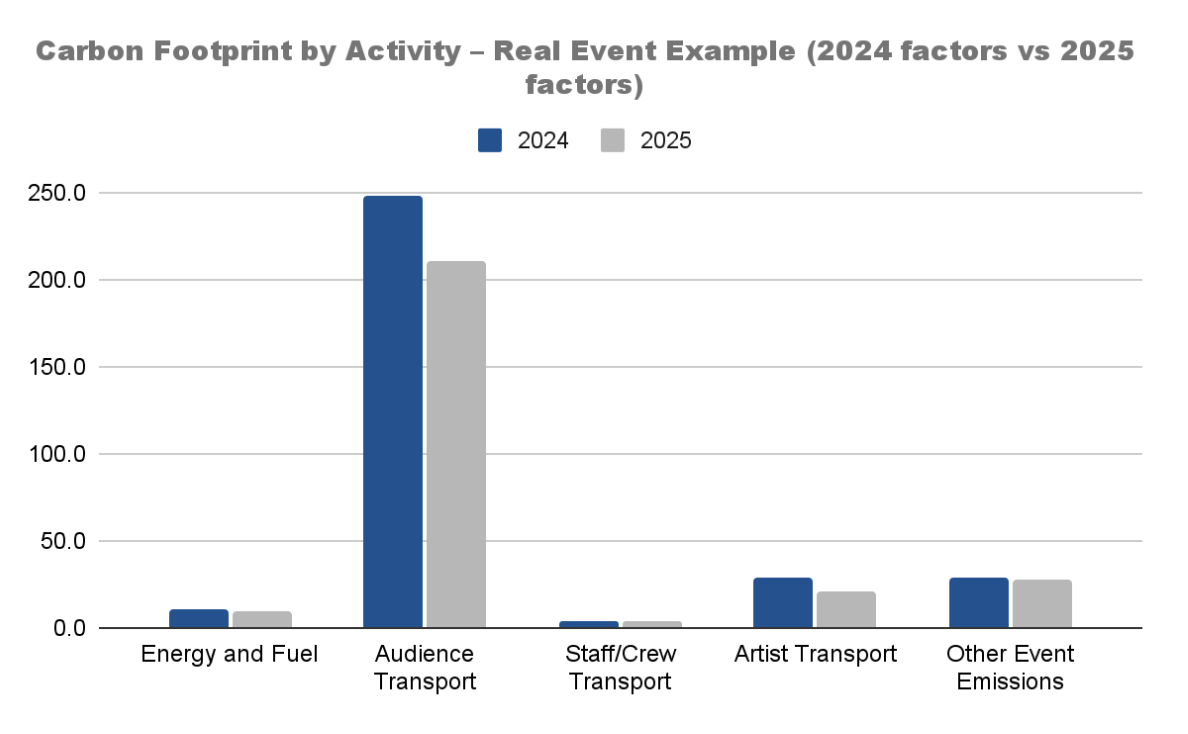
These changes reflect improvements in calculation methods, but they do not mean that festivals are automatically becoming sustainable.
Real progress requires action!

What This Means for Festival Organisers:
Events with international audiences and artists will see the largest reported emission reductions.
Grid electricity/battery systems are now even more advantageous.
Diesel generators will report higher emissions.
Switching to battery electric vehicles (BEVs) offer clear benefits when paired with an increasingly decarbonised grid.
Waste and water remain small contributors but are still important for operational efficiency.
We at A Greener Future offer carbon footprint assessments and tailored reduction strategies for festivals, events, venues, arenas, and other stakeholders across the live events industry. If you’re interested, get in touch with us or read more here.
