
AGF Insider: Trends and Best Practices in Sustainability with Françoise Cardoso and Amber Mundinger
Welcome to AGF Insider, our insightful series where we bring you monthly interviews with industry experts.
Each month we catch up with industry leaders in sustainability world to find the current trends and best practices.
This month, we feature Françoise Cardoso, Global Director of Corporate Social Responsibility, and Amber Mundinger, Global Director of Creative Engagement at L-Acoustics. They share their insights on innovation, challenges, and the future of sustainable sound and artistic engagement.

What are the best practices that you are seeing give the best results?
Françoise
L-Acoustics has been making significant strides in sustainability, embedding eco-conscious practices across its operations. Here are the most impactful sustainable practices currently delivering strong results:We began with a comprehensive carbon footprint assessment. This data-driven approach, conducted with third-party consultant ekodev, forms the foundation for a five-year sustainability roadmap.
We’ve also embraced a circular economy approach and extended product lifecycles through several key initiatives::
Enhanced repairability: Products are designed to be easily repairable, extending their usable life.
Component recycling: Our dealer network facilitates responsible recycling and reuse.
Eco-design principles: L-Acoustics has integrated eco-design since 1992, focusing on sustainable materials and modularity.
Currently, our products use recycled content and we plan increase this number.
Furthermore, education and internal engagement are at the core of what we do as we believe in people sustainability.
Regular sustainability workshops for employees, led by CSR leaders.
Integration of sustainability into departmental roadmaps (R&D, Industry, Product Management, HR).
Emphasis on diversity, inclusion, and employee empowerment.
Creation of a global CSR community.
Amber
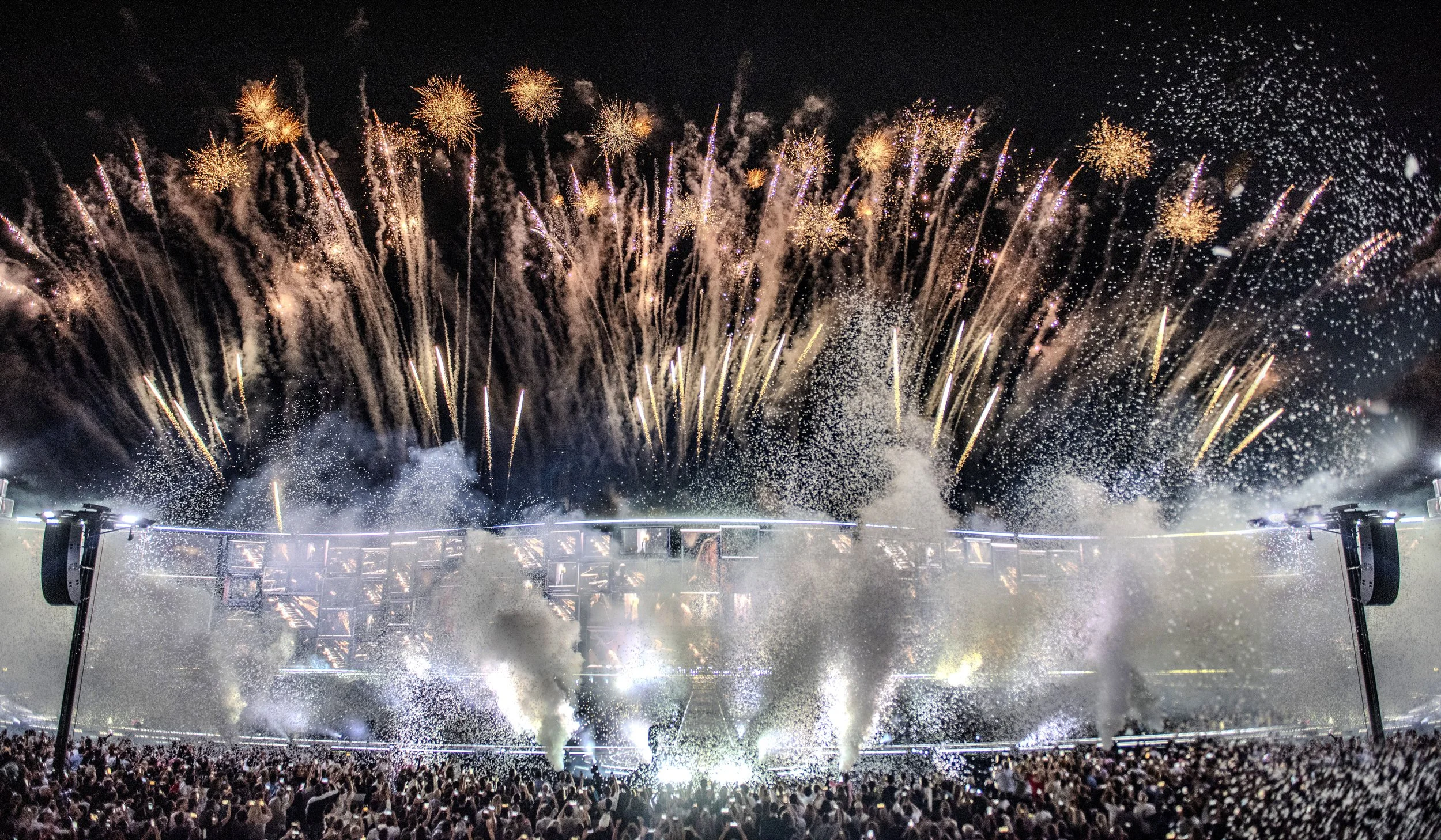
At our 2025 Keynote in London, L-Acoustics showcased new innovations with the event ending with a performance by Max Cooper. As an artist Max is known for blending his music with environmental and scientific narratives and visual collaborations, often exploring themes of nature, cycles, and the interconnectedness of life.
This event further showcased the emotional power of immersive sound in storytelling and demonstrated how artistic engagement can amplify our sustainability narrative across multiple formats and styles of events.
We also continue to commit to strategic partnerships for sustainable art, and to highlight the connection between artistry and the environment. L-Acoustics collaborates with organizations like Earth Percent, Sounds Right with the Museum for the United Nations, and Reforest’Action, integrating environmental impact into the music industry and sharing artistic perspectives on sustainability. These partnerships enable us to fund reforestation through music-related revenue and encourage artists to embed sustainability into their creative missions.
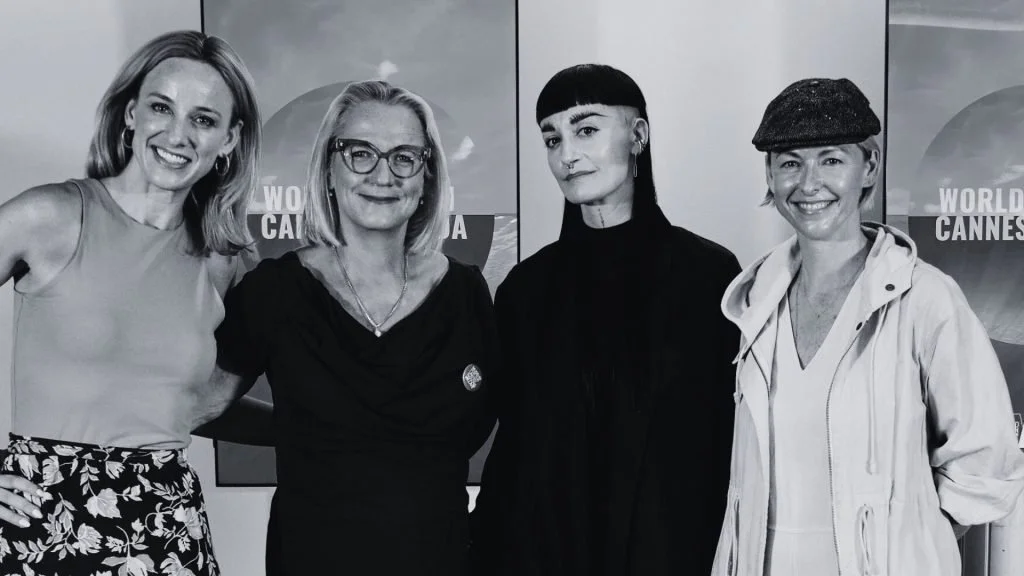
(World Woman Foundation, L-Acoustics)
What trends are you seeing this year?
Françoise
Education, inclusion, and workforce empowerment are the trends I anticipate for the next coming years. Therefore, we are investing in sustainability education through partnerships with UNITAR to educate our people and communities on the main challenges related to the Sustainable Development Goals. We also champion diversity and inclusion by giving equal opportunities to all. This includes a profit-sharing mechanism and internal engagement to align teams with sustainability goals. This reflects a broader trend of embedding sustainability into company culture and values.
Amber
We aim at integrating Sustainability into artistic and social impact. L-Acoustics is blending sustainability with artistic engagement by supporting Earth Percent and the Sounds Right initiative from the UN Live Museum to link artistic engagement with nature conservation and preservation. We look to support creative collaborations that highlight the power of sustainability through shared sound experiences. We’re also promoting sound exposure management and safe listening and we’re hosting and collaborating on immersive performances that raise environmental awareness. The continued trends we are seeing are the connection between the role of music and sound in driving cultural change. And more artistic campaigns weaving in elements of nature that tie back to funding key global issues.
What are the obstacles?
Françoise
Our main challenge is sourcing sustainable materials like certified wood and recycled components, which is not always straightforward.
Ensuring traceability and ethical sourcing across a global supply chain is still challenging, especially as demand for sustainable materials increases.
Finally, we to foster industry-wide standards and collaboration, as the live sound and entertainment industry lacks unified sustainability standards. L-Acoustics is pushing for broader adoption through partnerships (e.g., A Greener Future, the Music Sustainability Alliance).
Amber
Balancing artistic freedom with environmental constraints is a major challenge. Artists often seek maximum creative flexibility, which can conflict with sustainability goals. For example, large-scale immersive setups may require more equipment and energy. Touring artists may resist downsizing or localizing performances, even if it reduces emissions. These obstacles are also an opportunity to grow and innovate.
What would be the biggest game changer from your perspective?
Françoise
Touring is one of the most carbon-intensive aspects of the music industry. A game changer would be electric or hydrogen-powered tour buses and freight trucks. Modular, lightweight stage setups that reduce transport emission would also be a game changer for our industry. The most impactful innovations would be localized tour routing algorithms to minimize travel distances.
Venues and festivals could lead the way by using renewable energy sources and implementing zero-waste policies with reusable materials.
A global sustainability certification for music, like a “Fair Trade” label, could incentivize eco-friendly practices across the industry, from production to performance.
Amber
A game changer for artistic engagement in sustainability would be a shift that not only reduces environmental impact but also deepens the emotional and participatory connection between artists, audiences, and the planet. Imagine concerts or exhibitions that use augmented reality (AR) or virtual reality (VR) to simulate climate futures or natural ecosystems. Let fans interact with sustainability themes through soundscapes, visuals, and tactile installations.
From the artists point of view, more widespread collaboration with climate scientists, indigenous communities, and ecologists to create works that restore ecosystems. We are seeing more and more artists doing this, but the adoption and critical mass of those involved will hopefully continue to grow. Also further use of biodegradable, recycled, or living materials in installations and performances would be game changing.
AI-enhanced eco storytelling could be a game changer as well. Imagine a scenario where AI could help artists craft interactive narratives where fans shape the outcome based on sustainability choices. These eco stories could be told through music, visuals, and live performance.
What’s the next big thing in sustainability in events?
Françoise
The next big thing in sustainability for events in 2025 is a shift from symbolic gestures to deep, measurable impact, driven by innovation, accountability, and audience expectations. Carbon-consolidating event models will be the next big thing: events are being reimagined as carbon consolidators-places where stakeholders meet in one location rather than traveling separately, to reduce overall emissions. This reframes events as climate-efficient hubs rather than liabilities
We also must consider regenerative event design. Going beyond “net zero,” some events now aim to be regenerative by restoring ecosystems (e.g., planting trees per attendee), using biodegradable materials and living architecture, and hosting events in carbon-positive venues.
Another big development involves events adopting third-party sustainability certifications to prove their impact. We can definitely contribute to defining those certifications from a product perspective.
Sustainability is no longer a side note; it’s the central story as events feature eco-literacy workshops, climate storytelling, and immersive sustainability experiences. Attendees are engaged as co-creators in climate action.
Amber
Strategic leadership and co-responsibility are the next big things for artists. Indeed, artists are no longer just endorsing green practices, they’re designing them into their tours by demanding sustainable logistics (e.g., sea freight over air freight) or requiring eco-certifications from venues.
Artists are also leveraging their platforms to launch fan-powered sustainability campaigns, encourage climate pledges at shows or reward eco-actions with exclusive content or experiences.
Beyond performative activism, there’s a growing call for artists to share responsibility with production and promoters, embedding sustainability into contracts and riders and using their influence to shift industry norms.
We also see immersive eco-narratives as a big thing as artists are experimenting with AR/VR experiences that immerse fans in climate stories, interactive installations that visualize environmental impact and “regenerative art” that restores ecosystems as part of the show.
We hope you found Françoise and Amber’s insights on sustainability trends and best practices both informative and inspiring. Keep an eye out for next month's edition of AGF Insider, where we’ll bring you more expert perspectives and fresh ideas!
