AGF Insider: Mark Wells ON BEST PRACTICES IN SUSTAINABILITY
Welcome to AGF Insider, our insightful series where we bring you monthly interviews with industry experts.
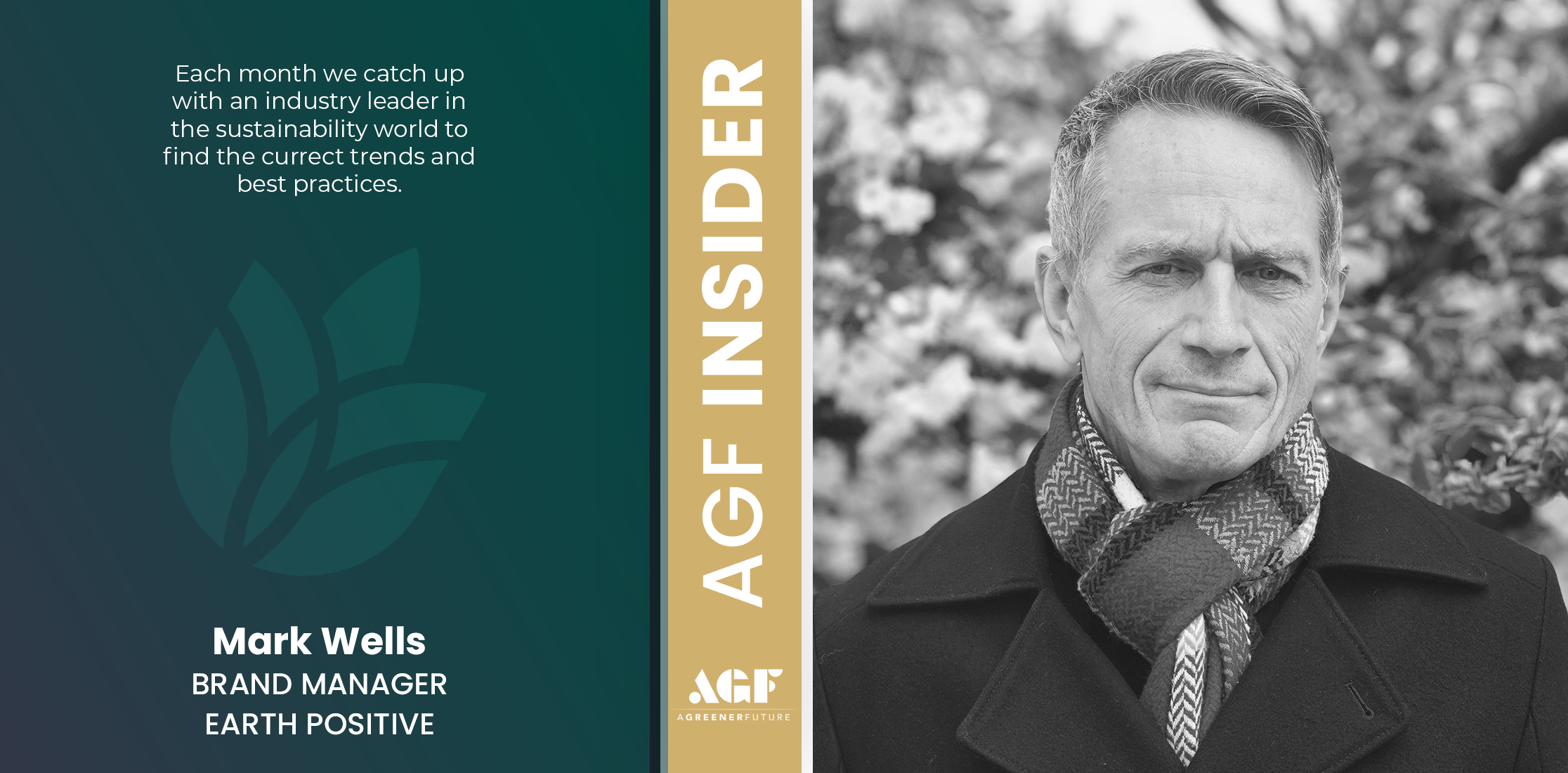
Each month we catch up with an industry leader in the sustainability world to find the current trends and best practices
This month, we catch up with Earth Positive’s Brand Manager Mark Wells.
What are the best practices that you are seeing give the best results?
The single biggest shift we've seen is brands, festivals and event organisers starting to take Scope 3 emissions starting to seriously rather than treating them as someone else's problem. Merchandise has historically sat in a blind spot, but that's changing.
What works best is organisers requiring Scope 3 accountability from suppliers and merch partners, and in turn their purchasing Teams. Festivals that mandate verified emissions data from vendors get cleaner, more honest reporting overall, and great looking merch!

What trends are you seeing this year?
Fans are demanding more sustainable merchandise from festivals and artists, and the industry is responding. Bravado, the merchandising arm of Universal Music Group, has made sustainability a core part of its purchasing and operations, transforming its supply chain through strategic partnerships and material changes.
At the live events level, Live Nation is being directly influenced by artists. Coldplay's push for lower-carbon touring has fed into Live Nation adopting a stronger sustainability position and a focus on reducing CO2e across their operations.
Sustainability is moving from an after thought to expected, driven both by fans and merchandise/events companies.
What are the obstacles?
Cost is still the most cited obstacle by festivals and event organisers. But it's worth examining that closely.
The price gap has actually narrowed. Multinational blank brands have increased their prices while sustainable options have largely held steady. The divide still exists, but it's smaller than most purchasing teams think.
More importantly, cheap doesn't mean best. Like-for-like, a climate-neutral, GOTS-certified, ethically manufactured garment is competitive on price when you factor in what you're actually getting: better quality, stronger fan perception, and a product that doesn't carry hidden costs.
Because those hidden costs are real. Someone pays the price for cheap conventional apparel. It's the farmers exposed to pesticides, the factory workers on poverty wages, and all of us living with the consequences of oil-derived artificial fertilisers, chemical water runoff, and untreated dye house effluent entering waterways.
Then there's the CO2e saving. Earth Positive saves over 7kg of CO2e per T-shirt compared to conventional production, driven by wind and solar powered manufacturing and production line efficiencies. Multiply that across thousands of units at a festival and the saving is significant. That's not a marginal gain; it's a meaningful reduction that purchasing teams can report against their own sustainability targets.
The obstacle isn't really cost. It's a habits and assumptions that haven't caught up with the reality of what sustainable apparel now offers.

What’s the next big thing in sustainability in events?
Greenwashing is out. From September 2026, Germany enforces new anti-greenwashing legislation requiring all sustainability claims to be substantiated. EU-wide Digital Product Passport compliance follows in 2027, with fines and exclusion from public procurement for non-compliance.
In the UK, the Digital Markets, Competition and Consumers Act (DMCCA), in force from April 2025, gives the CMA the power to directly fine companies up to 10% of global turnover for misleading environmental claims, without going to court.
DPP data will be relayed directly through Earth Positive apparel via our forthcoming NFC and dual-frequency tag labels, giving festivals, events companies, and merchandise partners a built-in compliance pathway.
The groundwork is already laid. Earth Positive is 90% climate neutral, GOTS certified organic, and ethically manufactured under Fair Wear oversight. These are verified, auditable claims. All relayed by the tags in Earth positive t-shirts hoodies etc.
What would be the biggest game changer from your perspective?
Festivals and events genuinely seizing the nettle on Scope 3 emissions. Too many organisations, including sustainability teams who should know better, have treated Scope 3 as someone else's problem. It isn't.
Merchandise is a direct Scope 3 emission source and it's one of the easiest to act on. You choose your supplier. That choice either adds to the problem or reduces it. There's no grey area.
The game changer is purchasing teams, sustainability managers, and senior leadership all stopping the shoulder shrug and demanding verified emissions data from every supplier in their chain. When that becomes standard practice, the "game" changes.
Keep an eye out for next month's edition of AGF Insider, where we'll bring you more expert perspectives and fresh ideas!
